
- Home
- By Industry
- Custom Packaging
- Our Products
- Blogs
- Request Quote
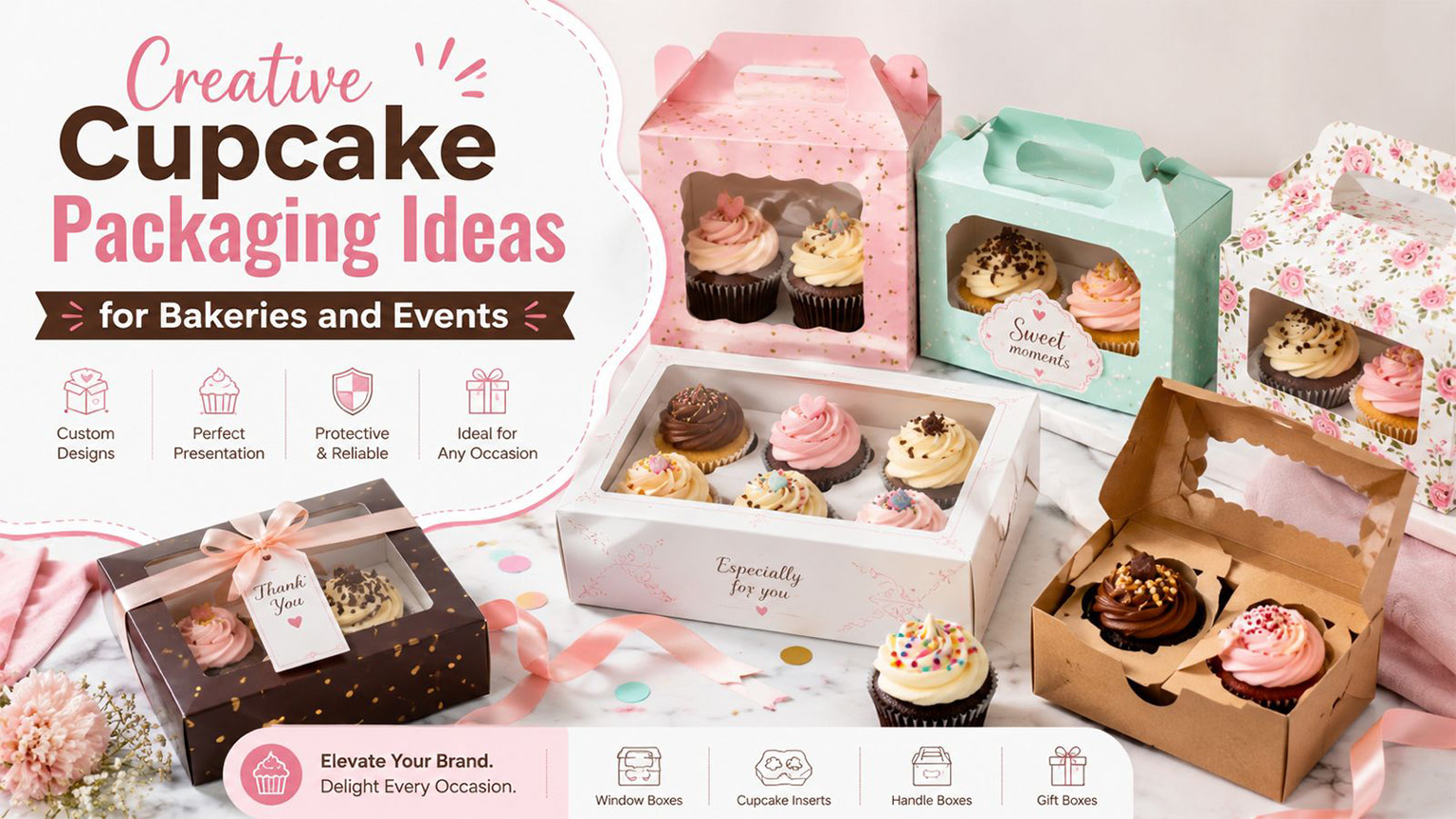
Good cupcake packaging balances four things: structure, print, usability, and cost. Ignore any one of them, and even great artwork can fall flat on a real shelf. This guide covers creative cupcake packaging ideas for bakeries and events. It applies whether you sell single cupcakes, multipacks, decorated cupcakes, or event packs. The goal is a box that suits its price point yet stays easy to make, fill, ship, display, and read at a glance. Rather than leaning on filler text or heavy finishes, strong packaging decisions answer real buyer questions: which stock to use, how much protection you need, and where to trim cost. The points below give you a simple checklist to build or review a spec.
Your design should tell shoppers what the product is within a few seconds. Appetising brand colours, occasion graphics, a clear logo, and simple flavour labels all help. Give the front panel a clear order: brand first, product name second, then the one detail that sets this box apart. Move supporting details to the side and back panels. One well-chosen texture or reflective accent often looks more premium than several effects at war with each other. Design at full size, and pull a colour proof whenever accuracy matters. Fine text, gradients, and metallic inks can print differently on board than on screen, especially on uncoated kraft.
A window builds trust by showing the real cupcake. But it changes both the structure and how the box is recycled. The cut-out shouldn't weaken a key fold or leave a fragile edge exposed to knocks. If you add film, specify its clarity, where it's glued, and whether the customer can peel it off to recycle it. A printed image can also beat a window, freeing up print space while keeping the contents covered. Prototype the window at full size. Then check glare, product alignment, and what a shopper sees from a normal shelf angle.
Structure decides how your box opens, closes, stacks, and holds up in transit. Match the format to how each cupcake is filled and displayed. Common options for cupcake packaging include:
For a wider view of formats, see our guide to popular custom box styles in Canada. Inserts and partitions matter just as much, holding each cupcake away from the outer walls. Before you approve artwork, ask for a plain structural sample. A prototype shows problems a flat dieline can't: weak locking tabs, an awkward opening force, or a box that dwarfs the product. If you sell cupcakes in several sizes, sample the smallest and largest first.
The way a box opens shapes how customers judge quality. Tabs should be obvious, and inserts should release the cupcake without a fight. Nothing should tear on first use unless it's meant to be tamper-evident. A premium feel needs a precise fit, clean edges, and a controlled reveal — not clever mechanics. If people keep the box after opening, check that it recloses and still protects the cupcake. Hand an unbranded sample to a few people and watch them open it with no instructions. Their behaviour tells you fast whether the box works. Small tweaks to finger notches, pull tabs, or opening direction can make the whole box feel more considered.
Retail packaging has to win at arm's length, not just in a close-up mockup. The front panel needs to stay readable under store lighting and beside competing designs. Decide early whether the box will be front-faced, side-faced, hung, stacked, or dropped into a display tray. Keep key details clear of shelf lips and price stickers. Matte lamination cuts glare, while a touch of gloss or foil can pull the eye to one focal point. Test shelf presence by standing printed mockups next to rival box sizes. That quick check often reveals a logo that's too small or a flavour name that's hard to find.
The best cupcake packaging comes from testing structure, artwork, and logistics together. In short: match the box and stock to the product, keep the visual order clean, leave room for required information, and prove the packed box works before a full run. Ask for dielines and samples, and review print details at actual size. Back up any sustainability or compliance claims with documented specs, not vague promises. Do that, and your packaging will protect the cupcake, build brand recognition, and lift presentation without wasting material or budget. If you'd like help turning these cupcake packaging ideas into a finished spec, iCustomBoxes Canada offers free design support, free samples, and a 10–12 business-day turnaround — request a quote to get started.


