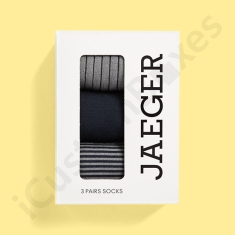
What Custom Wallet Boxes Have to Do
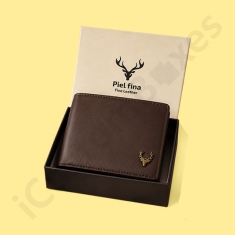
A wallet box has three jobs that pull against each other. It has to hold a soft, foldable object in a fixed position, survive a courier without corner crush, and open like a gift, because a wallet is bought as one more often than not.
Get the fit wrong and the wallet slides. A product sitting crooked against one wall reads as cheap regardless of what the wallet cost.
Custom Box Styles for Wallet Packaging
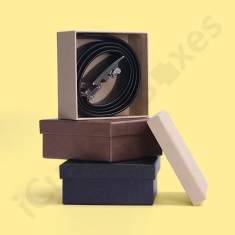
Rigid two-piece (lid and base) is the standard for retail leather goods. Fully assembled, sturdy, and the lid lift is the moment customers remember.
Magnetic closure rigid folds flat for storage and snaps shut. The better choice when customers keep the box, which they often do.
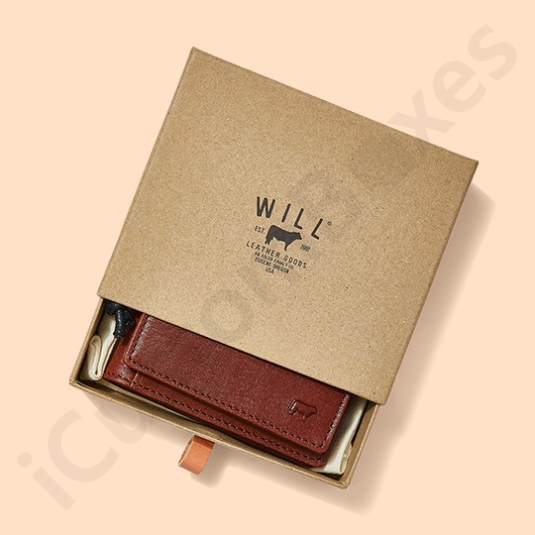
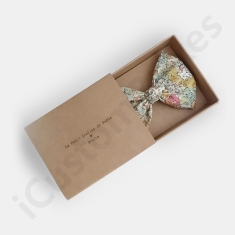
Drawer or matchbox style slides out on a ribbon pull. It holds an insert securely because nothing tips out.
Folding carton in 18pt to 24pt cardstock costs a fraction of rigid and suits mid-price lines or ecommerce, where the box travels inside a mailer anyway.
Window box with a PVC or PET panel lets buyers see the leather grain and stitching before they open anything.
Sizing a Wallet Box: Bifold, Long and Card Holder
Measure the wallet closed, then add clearance. Roughly:
- Bifold: wallet around 11.5 x 9 cm, box around 12.5 x 10 x 3 cm
- Long or travel wallet: wallet around 19 x 10 cm, box around 20 x 11 x 3.5 cm
- Card holder: wallet around 10.5 x 7 cm, box around 11.5 x 8 x 2.5 cm
Depth is where brands usually get it wrong. A bifold with card slots filled sits thicker than the empty sample you measured, so build depth around the wallet as customers will receive it, not flat off the workbench.
Inserts That Hold the Wallet in Place
EVA foam cut to the wallet outline grips it and cushions courier knocks.
Die-cut card platform raises the wallet slightly off the base. Lighter and cheaper than foam, and recyclable with the box.
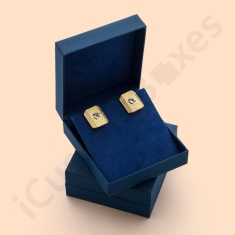
Satin or velvet-lined tray for premium lines where the interior should feel like the product.
Ribbon pull under the wallet so the customer lifts it out instead of digging with fingers.
Materials and Finishes for Leather Goods Brands
Rigid boxes are built on 1.5mm to 2mm greyboard and wrapped in printed art paper, or in a specialty stock such as linen-textured or leatherette paper that echoes the product's own surface.
On finishes, a practical warning. Soft-touch lamination feels excellent and photographs beautifully, but on a dark box it holds fingerprints, and every customer who picks it up in-store leaves one. Gloss shows scuffs from shelf handling. Matte lamination or an uncoated textured paper handles retail traffic better. Foil stamping, blind debossing and spot UV all sit well on top of any of them.
One more thing specific to leather: it needs air. A fully sealed box stored through a humid summer can grow surface mould on the product, so brands holding stock for months add a silica sachet under the insert.
Retail Shelf, Ecommerce Shipping and Gifting
For retail, the box is the salesperson. Window panels, foil logos and shelf-ready proportions earn their cost.
For ecommerce, a rigid box on its own is not a shipper. Corners crush and edges scuff in transit. Pack it inside a printed corrugated mailer, or move to a mailer with a printed interior and a built-in insert.
For gifting, wallets peak around Father's Day, graduation in May and June, and Christmas. Canadian brands usually want holiday artwork approved by early October to be on shelves in time.
These sit within our rigid boxes, and brands running a full accessories line often order matching apparel boxes so the packaging is consistent across the collection.
Ordering Custom Wallet Boxes in Canada
Send your wallet dimensions, quantity, style and stock. Our designers set up the dieline at no charge, return a digital mockup, and produce a physical sample on request. Standard turnaround is 10 to 12 business days from artwork approval, with free shipping across Canada. Minimum quantities are low and vary by style.